


It is well recognized that the Accounting and Auditing Board of Ethiopia (AABE) was set up following the financial reporting Proclamation No. 847/2014 and Council of Ministers Regulation No. 332/2014 to regulate the accountancy profession and enforce high-quality financial reporting. It mandates the adoption of International Financial Reporting Standards (IFRS), and International Public Sector Accounting Standards (IPSAS).
With a view to meeting the very objectives like promoting the presentation of international financial reporting, attaining international auditing standards and protecting public wealth, of late the Board organized a half day consultative forum, which brought a number of companies, organizations, banks and other financial institutions willing to working with the Board.
Speaking at the event, AABE Director General, Fekadu Agonafir said that since the inception of the Board, it has been dealing with awareness raising activities about the first five to six years, and focusing on various cardinal activities to attain the objectives of the Board. The Board has these days capitalized on assisting companies as it has been discussing issues and providing them with the required feedback.

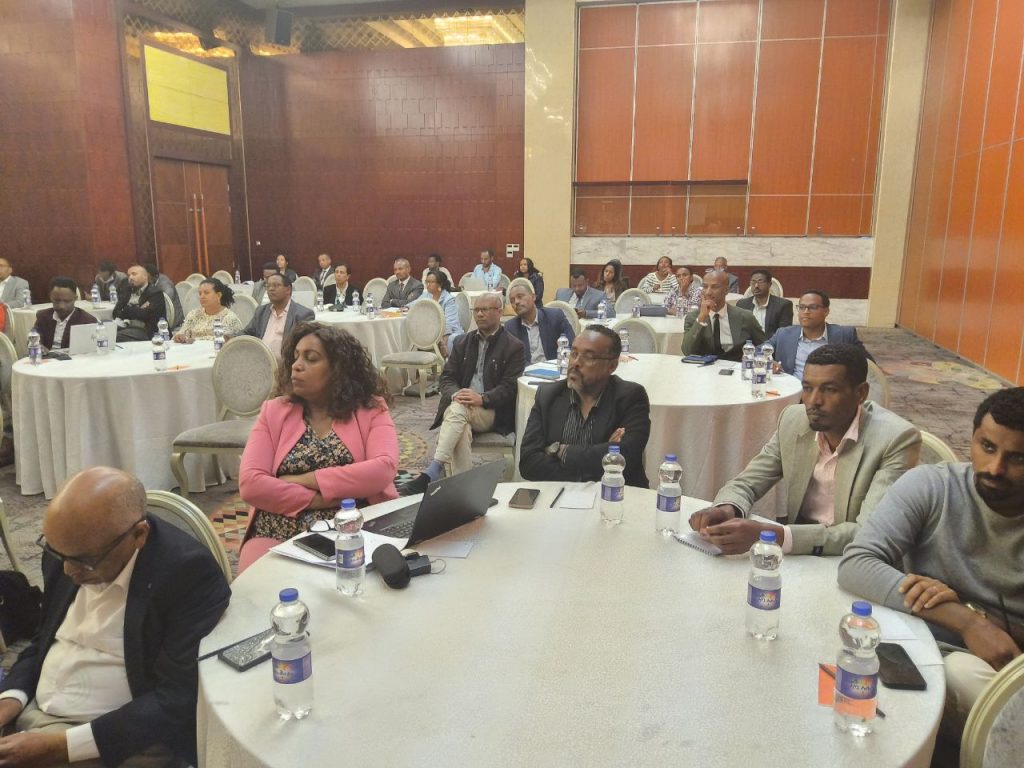
As to him, the quality of financial reports of Ethiopian financial institutions is decided to be moderate by users of accounting information in the country taking reporting qualities of understandability, relevance, comparability and faith representation into consideration. It is therefore recommended that finance directors, accounting, finance officers and IFRS implementation teams shall consider intensive investigation on the accounting information.
The adoption of IFRS is expected to improve financial reporting quality and accounting information on financial reports. The Board has urged the government to try to incorporate the teaching of the standard into all levels of accounting education for proper awareness of the stock to improve quality financial reporting.

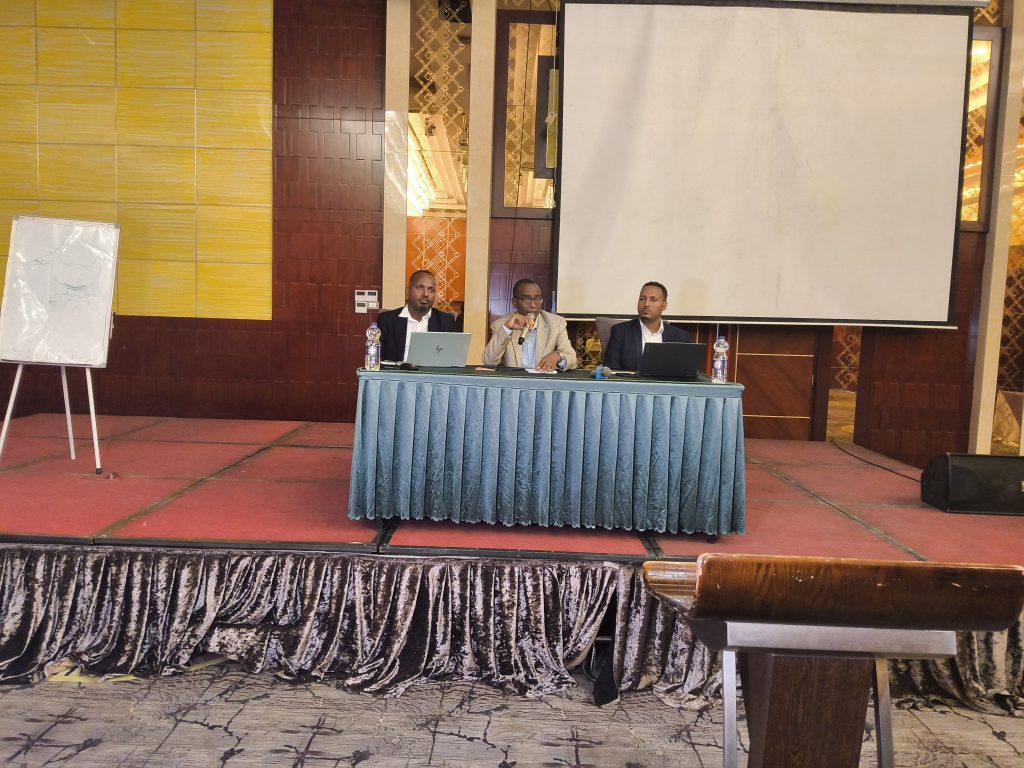
The adoption of IFRS compliant set of financial statements responsible for improved financial reporting quality by improving financial information of financial reports. Since the regulatory authorities have the responsibility of ensuring that state entities follow the laid down procedures and regulations, they need to ensure that all public entities conform to the appropriate controls, functional audit committees and full adoption of international public accounting standards where quality reporting is adhered to improving financial information of financial reports.
If reports are not prepared and corrected as per the comments and feedback, the Board is forced to take legal measures, law enforcement follows, and he added that out of the 230 audit firms, 80% of them are reviewed, and perform a range of tasks. Relevant support and follow up is also conducted in a bid to help companies come to the right track.
According to Fekadu, under the framework of the Board, the same reports have to be prepared, but in most cases the Board is given a report and banks are provided with a different one. As if there are two standards, preparing reports like this is an unlawful move and reporting the same theme in different dimensions doesn’t work. AABE is arduously working for protecting public wealth and keeping public interest. The financial report review presented at the occasion revolved around presenting high quality reporting, promoting means for investors attraction, protecting public assets and conducting a well defined financial report review, which helps bridge gaps, if any. Processes ranging from selection to following up companies are properly undertaken so as to help participating companies come up with standardized financial reports and enable the country to enjoy carrying out financial reporting keeping the international standard.
According to Fekadu, the very question stating that ‘why companies have failed to comply with the International Financial Reporting Standards (IFRS)? though this is a newly advent and an ocean too, we, all the companies and AABE itself, have to have capacity to meet standards in the era of globalization and dramatic digitization. He said, “Since we encounter technical gaps most of the time, lack of ownership as the owner/or the auditor who prepares the financial statement and audit it himself/herself. Besides, auditors are not that much qualified, serious lack of duty; that is why IFRS is not properly met. Regulatory enforcement lacks, too.” As to him, the way forward needs to be well underscored and working together for promoting competency, building capacity, before issuing financial reporting, pre-issuing needs to be applied. “Some companies are not in a position to make a cross reference with the major compliance aspects, most of them lack company-specific disclosure. Yes, company-specific disclosure has to be presented as it indicates, and cash flow statements have to be well compatible with the real company dynamism. Besides, fair value measurement has to be well reported and properly adjusted. Non-compliance have to be corrected for a common growth and national development as they don’t have solely a single effect. Of the close to 275 companies, some 20 ones are ordered to re-work because they have never met IFRS.” Financial reports have been re-reviewed, but not improved. Fundamentally, AABE has been undertaking activities targeting at encouraging investors, protecting public wealth and following up companies and helping them correct pitfalls via proving them with appropriate feedback. According to Fekadu, lack of skilled human power, lack of capacity to attain IFRS can be addressed by identifying auditing levels/standards to increase their quality. AABE’s responsibilities include expanding support for companies, providing them with training with a view to producing capable ones.
Even the Revenue authority doesn’t have knowledge about various parameters or requirements IFRS does have. Comments forwarded from participants, universities have to train students with IFRS and CPA, the country has to benefit out of these bounties. AABE needs to have its own training center locally, it has to be accessible to all interested via creating good market approach. Capacity building has to be well embarked on as capacity problem is observed. Responding to the question stating that ‘AABE itself doesn’t have a consistent follow up and regular pattern to run activities, Fekadu said, “We are now as AABE making reforms in all aspects and dealing with meaningful activities that make the companies in particular and and the nation in general benefited.“Everyone of us has to move in unison to bridge the gaps and discharge our respective responsibility as efficiently as possible since a single handed effort leads nowhere. Here, the issue of capacity building and effort of keeping IFRS should not be left only to one party, like AABE for instance, as it requires the combined effort of all.” He further stated that financial reporting should be standardized and public interest has to be well observed and the issue of sustainability has to receive due attention.
To this end, the commitment of the management matters the most and expertise, capable personalities. Besides, the gaps observed regarding presenting standardized financial reporting need to be well bridged and even to the extent that auditors might be penalized. As stated by the participants, he said center of excellence and training centers have to be well promoted and nurtured. As to him, a company/a given auditor should never audit what its has prepared. Not only is such an outrageous move an unacceptable trial but it is also unethical feature. Thus, there should be a very lucid agreement/contract between the companies and their respective auditors. The very thing that needs to be well comprehended that preparing two different documents is an illicit move attracting legal measure.
AABE Deputy Director General, Tsiwaye Muluneh on her part said that AABE is principally working hard towards promoting public interest protection, boosting institutions’ financial health and creating investor friendly Eco-system. As to her, as a regulatory body, if companies act out of track, law enforcement measures are going to be taken. She further sated that since financial reports are expected to be relevant, standardized viable and well defined, we, AABE and companies, have to join hands and work together to bridge gaps, solve the existing problems thereby coming up with a well secured public interest. .